Blog

Useful ideas, written simply.

A clean and professional space for nutrition insights, research support, data analysis tips, and practical guidance for students and professionals.

Nzali Phiri
Your digital nutritionist
Featured Article

Healthy Eating on a Budget in Zambia

Latest Articles

More to explore

Browse Archive
Academic research and study planning
Research 4 min read

How to Approach Academic Research with Confidence

Start with clarity, use reliable sources, and stay organized from the beginning.

Read article

Start with a Clear Question

Every strong research project begins with a clear and focused question. Knowing exactly what you want to investigate helps you stay on track and avoid information overload.

Use Reliable Sources

Not all information online is trustworthy. Prioritize academic journals, books, government publications, and reputable organizations. Reliable sources strengthen the quality and credibility of your work.

Stay Organized

Keep detailed notes as you read and record your references from the beginning. Organizing your findings early saves time and reduces stress when writing your final paper.

Think Critically

Research is more than collecting information. Compare different viewpoints, evaluate evidence carefully, and look for patterns or gaps in the information you find.

Be Patient and Consistent

Good research takes time. Progress may feel slow at first, but a methodical approach will help you build a strong foundation and produce meaningful results.

The Bottom Line

Academic research is not about finding quick answers—it is about asking the right questions, exploring evidence carefully, and developing well-supported conclusions.

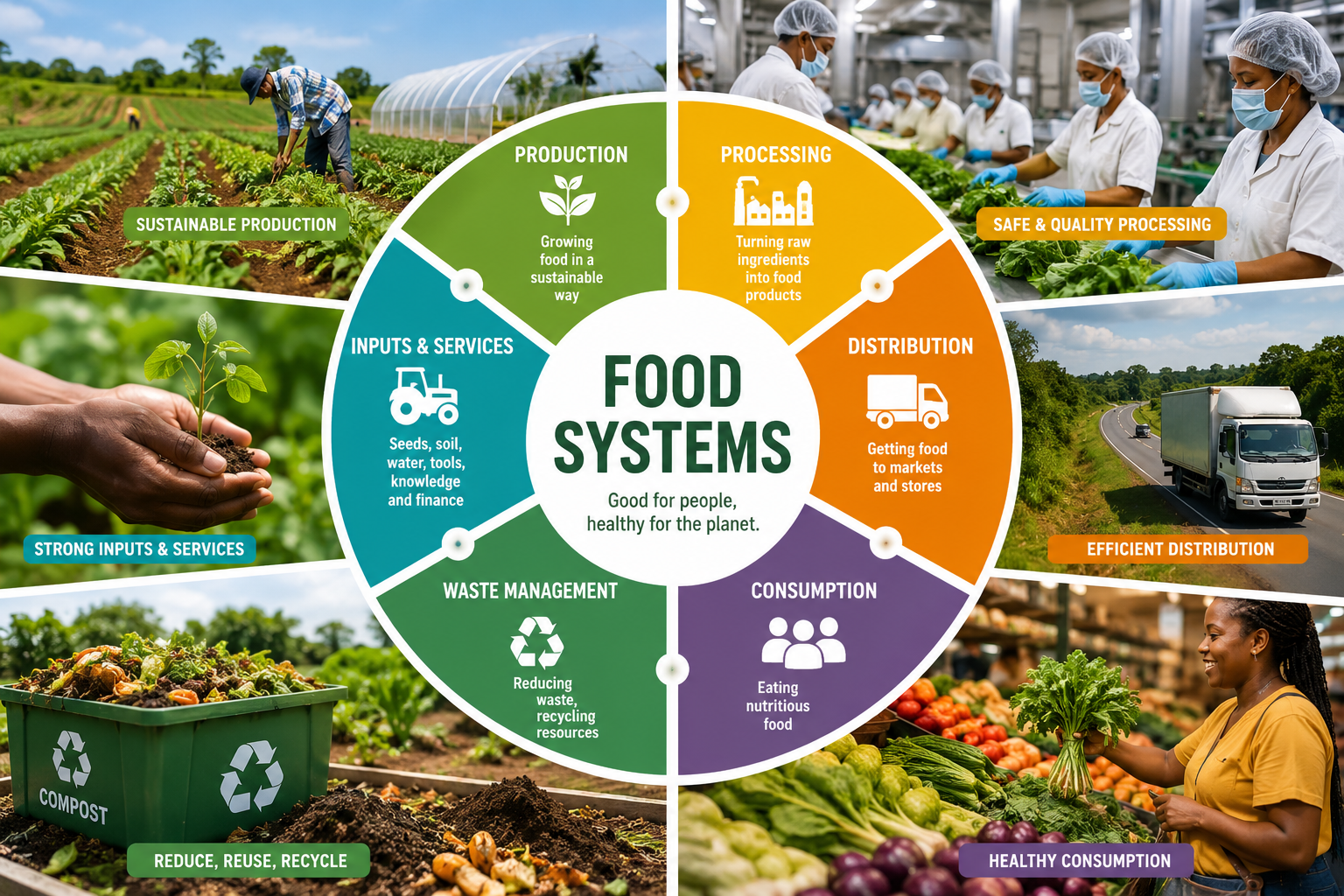
Young people working in food systems
Food Systems 5 min read

Reshaping Food Systems: How Youths Can Get Involved

Young people have the power to transform food systems and contribute to a healthier, more sustainable future.

Read article

Food systems encompass all the activities involved in producing, processing, transporting, marketing, consuming, and disposing of food. They influence not only what we eat but also livelihoods, environmental sustainability, and public health. As global populations continue to grow, food systems face increasing pressure from climate change, resource depletion, and food insecurity.

Youths are uniquely positioned to drive innovation and positive change. With their creativity, energy, and familiarity with technology, young people can help develop solutions that make food systems more efficient, sustainable, and inclusive.

One way to get involved is through agriculture and agribusiness. Young people can participate in crop production, livestock farming, food processing, or value addition enterprises. Modern agriculture increasingly relies on technology, creating opportunities in areas such as precision farming, digital marketing, and agricultural data management.

Nutrition education is another important area. Youths can promote healthy eating habits within their schools, universities, and communities. By sharing evidence-based nutrition information, they can help address malnutrition and improve public health outcomes.

Research and innovation also play a vital role in reshaping food systems. Students can conduct studies on food security, consumer behaviour, sustainable farming practices, and food waste management. Such research helps policymakers, businesses, and communities make informed decisions.

Reducing food loss and waste is equally important. Simple actions such as proper food storage, meal planning, composting, and supporting food recovery initiatives can contribute to more sustainable food systems while protecting natural resources.

Ultimately, building resilient food systems requires collaboration among governments, researchers, businesses, farmers, and consumers. By actively participating in agriculture, research, advocacy, and community initiatives, young people can help create food systems that are nutritious, sustainable, and capable of meeting the needs of future generations.

Professional development and employability skills
Career Development 5 min read

Why Your Degree Alone Is No Longer Enough in Today's Job Market

Employers are increasingly looking beyond academic qualifications when evaluating candidates.

Read article

For many years, earning a university degree was considered the ultimate ticket to employment. Students were encouraged to focus on academic excellence, graduate with good grades, and opportunities would naturally follow.

While education remains important, today's job market has evolved. Employers are increasingly seeking individuals who can demonstrate a combination of knowledge, practical skills, adaptability, and professional attributes that enable them to thrive in dynamic workplaces.

The Changing Nature of Work

Technological advancements, globalization, and evolving workplace demands have transformed how organizations operate. Many routine tasks can now be automated, making human skills such as problem-solving, communication, and creativity more valuable than ever.

As a result, employers are increasingly interested in what candidates can do, not just what qualifications they possess.

Skills Employers Value Most

Communication Skills: Whether writing reports, presenting findings, collaborating with colleagues, or engaging clients, the ability to communicate clearly remains one of the most sought-after skills across industries.

Problem-Solving Ability: Organizations face new challenges every day. Employers value individuals who can analyze situations, identify solutions, and make informed decisions.

Adaptability: New technologies, systems, and workplace processes require employees who are willing and able to learn continuously and embrace change.

Teamwork and Collaboration: Few jobs are performed in isolation. Employers seek people who can work effectively with diverse teams and contribute positively to organizational goals.

Digital Literacy: Familiarity with productivity software, online collaboration platforms, data analysis tools, and emerging technologies has become increasingly important.

The Importance of Experience

Academic knowledge provides a strong foundation, but practical experience demonstrates how that knowledge can be applied. Internships, volunteer work, research projects, leadership roles, and freelance assignments all help build valuable workplace competencies.

Even small projects can provide evidence of initiative, commitment, and practical capability.

Building a Strong Professional Profile

Students and graduates can improve their competitiveness by actively developing skills outside the classroom. Consider:

  • Participating in student organizations and professional associations.
  • Undertaking internships and volunteer opportunities.
  • Building a strong LinkedIn presence.
  • Attending workshops, webinars, and industry events.
  • Learning new digital tools and technologies.
  • Creating a portfolio of projects and achievements.

Final Thoughts

A university degree remains a valuable achievement, but it is no longer the sole factor that determines career success. Employers increasingly seek individuals who combine academic knowledge with practical skills, adaptability, communication, and a willingness to learn.

Your degree may open the door, but your skills, experience, and attitude will determine how far you go.


Need Support?

Book a Consultation or request a Service

If you need support with nutrition consultation, assignments, research, or data analysis, I would be glad to help.